How Florida Contractors Save Thousands by Choosing Used Construction Trailers Over New Units
I recall looking at a $40,000 bill for a new construction trailer, feeling upset as Florida’s humidity had already bent the edges. But here’s the key point: contractors like me buy used units for half the price-and succeed. This guide explains how to save money right away, avoid depreciation costs, pick homes built for hurricanes, find good sellers in Florida, do careful inspections, and calculate returns on investment that make buying used the smarter choice. Why pay more?
The Rising Demand for Construction Trailers in Florida
Florida’s construction sector boomed with 1.2 million new jobs projected by 2025 per the Florida Department of Economic Opportunity, driving demand for mobile offices and job trailers on booming sites like Miami-Dade projects.
Demand for these units has surged 25% since 2020, fueled by population growth (U.S. Census Bureau data showing Florida’s 15% increase). Consider a Miami contractor deploying five 20×8-foot office trailers on a $200M high-rise site, enhancing productivity by 15% through on-site management without commuting delays.
Key drivers include urban expansion-Orlando issued 10% more permits yearly-and remote work trends post-COVID. To implement, lease from providers like Mobile Mini ($500/month per unit) or purchase via IronPlanet auctions for custom setups.
By 2025, Dodge Data & Analytics forecasts 40% more trailers needed, advising early contracts to avoid shortages.
Why New Units Are Pricey: Initial Investment Breakdown
New construction trailers in Florida start at $25,000 for a basic 8×20 office unit from dealers like Trailers USA, but add-ons quickly push totals to $40,000+ before taxes.
Popular upgrades include AC units ($2,500), electrical hookups ($1,800), and custom shelving ($1,200), per Trailers USA quotes.
For a detailed cost comparison, consider this breakdown:\n \n \n \n \n \n
| Item | Cost | Example |
|---|---|---|
| Base Unit | $25,000 | 8×20 office trailer |
| Customization | $5,000+ | AC, wiring, interiors |
| Delivery | $1,500 | Within 100 miles |
| Total New | $31,500+ | Before taxes |
Opt for used models ($10,000-$15,000) via sites like Craigslist or IronPlanet to save 40-60%.
Florida DBPR regulations add 6% state sales tax plus up to 2% local, totaling 7-8%.
A ‘Construction Equipment Guide 2022’ study notes new units depreciate 20% in year one. Tip: Factor in 5-7% APR financing from lenders like CIT to ease upfront costs.
Used Construction Trailers Explained

Used trailers offer Florida contractors durable options like refurbished office units from 2018 models, often 50% cheaper than new. I’ve sourced these from local auctions, and you might find similar deals through used construction trailers for rent in Florida.
Types of Trailers Suitable for Florida Contractors
For Florida’s variable sites, I recommend office trailers (8×20 ft for admin) and equipment trailers (20-40 ft for tools), like the PJ Trailers models popular in Tampa builds.
For Florida’s range of construction jobs, look at these four trailer types and what each is used for:
- Office trailers: Ideal for meetings and admin (8×20 ft, $8-12K used), best for urban sites like Miami high-rises.
- Job site trailers: Focused on storage (10×40 ft, $10K), suited for flood-prone areas such as Miami.
- Equipment haulers: For transporting gear (towing capacity 10K lbs, $15K), essential for remote Everglades projects.
- Combo units: Office and storage combined (various layouts, $20K), suited for projects built in stages.
For instance, a Jacksonville firm deploys three office types on its $50M highway project. Research options via ASCE resources takes 1-2 weeks for the best fit.
Key Features to Look for in Pre-Owned Units
When evaluating used trailers, prioritize galvanized steel exteriors for rust resistance in Florida’s humidity, as in the 2020 Featherlite models that last 10+ years.
Next, inspect these key areas for safety and longevity:
- Frame integrity: Examine welds and joints for cracks; a certified inspector can use ultrasonic testing for hidden flaws.
- HVAC efficiency: Look for units like Trane with at least 13 SEER rating to cut cooling costs in humid climates.
- Electrical systems: Verify 110V outlets and GFCI protection compliant with NEC standards to prevent shocks.
- Plumbing: Check for PEX lines, which resist corrosion better than copper in salty air.
- Insulation: Use at least R-13 in walls to cut energy use, as the DOE advises.
- Doors and windows: Opt for impact-rated models to withstand hurricanes.
For example, a Tampa contractor revamped a $9K used trailer with $2K in HVAC upgrades, reducing bills by 20% annually. Reference: FEMA’s trailer resilience guidelines emphasize these for storm-prone areas.
Direct Cost Comparison: New vs. Used Trailers

Comparing a new 10×20 office trailer at $28,000 to a used 2019 model at $14,000 reveals immediate 50% savings, plus better ROI over 3 years in Florida projects. This differs significantly from typical pricing for used construction trailers in Florida, where detailed breakdowns often uncover even more value depending on condition and location.
Upfront Purchase Price Differences
A new office trailer from Mobile Mini costs $25,000-$35,000, while used ones on Craigslist Florida average $10,000-$18,000, letting you save $15,000 right off the bat.
To maximize savings, compare key aspects using Kelley Blue Book data, which shows used trailers retain 40-60% value after 5 years. Here’s a breakdown:
| Aspect | New (Mobile Mini) | Used (Craigslist FL) | Savings |
|---|---|---|---|
| Price | $30,000 avg | $14,000 avg | $16,000 |
| Examples | Trail King 2023: $32K | Miami Craigslist 2017: $12K; Orlando auction: $14K; eBay 2018: $16K | 40-60% off |
| Condition/Warranty | Brand new, 1-yr warranty | Inspected, 30-day seller guarantee | N/A |
Tip: Use emails to ask for 10-15% off on used items.
Point to similar listings to back up your request.
Inspect for leaks and wiring before purchase.
Depreciation and Long-Term Value Retention
New trailers lose 15-25% value in the first year per IRS Section 179 guidelines, while used ones from 5 years old retain 60% value after 3 more years of Florida use.
To capitalize on this, contractors in Florida should target 5-7-year-old trailers via platforms like TrailerTrader.com, inspecting for rust from coastal humidity using NADA Guides appraisals (average 2023 resale: 55-65% original value).
For tax benefits, deduct used trailers under Section 179 up to $1.16M in 2023, accelerating depreciation.
Example: A Fort Lauderdale builder buys a 2018 model for $15K (vs. $25K new), resells after 3 years for $12K, achieving 20% ROI while claiming $3K annual MACRS deductions-saving $720 in taxes at 24% rate.
Verify condition with VIN checks on NMVTIS for flood history.
Hidden Costs of New Trailers: Taxes, Delivery, and Setup
Beyond the $30,000 sticker, new trailers add $2,500 in Florida sales tax (6-7%), $1,200 delivery from suppliers like United Rentals, and $800 setup, totaling $4,500 extra.
Yet, four hidden costs often catch buyers off guard.
- county taxes vary-Broward adds 7%, equaling $2,100 on a $30K trailer.
- delivery via flatbed truck runs $1,000-$2,000 for 100-mile hauls.
- setup includes $500 leveling and $300 DBPR permits.
- annual registration costs $200 via Florida DMV.
To mitigate, buy locally to slash delivery by 50% or bundle setup services.
Case in point: A Palm Beach buyer overpaid $3,000 on a new trailer versus used local pickup, per Florida DOT transport fee data.
Save more than $2,000 through careful planning.
Florida-Specific Factors Influencing Savings
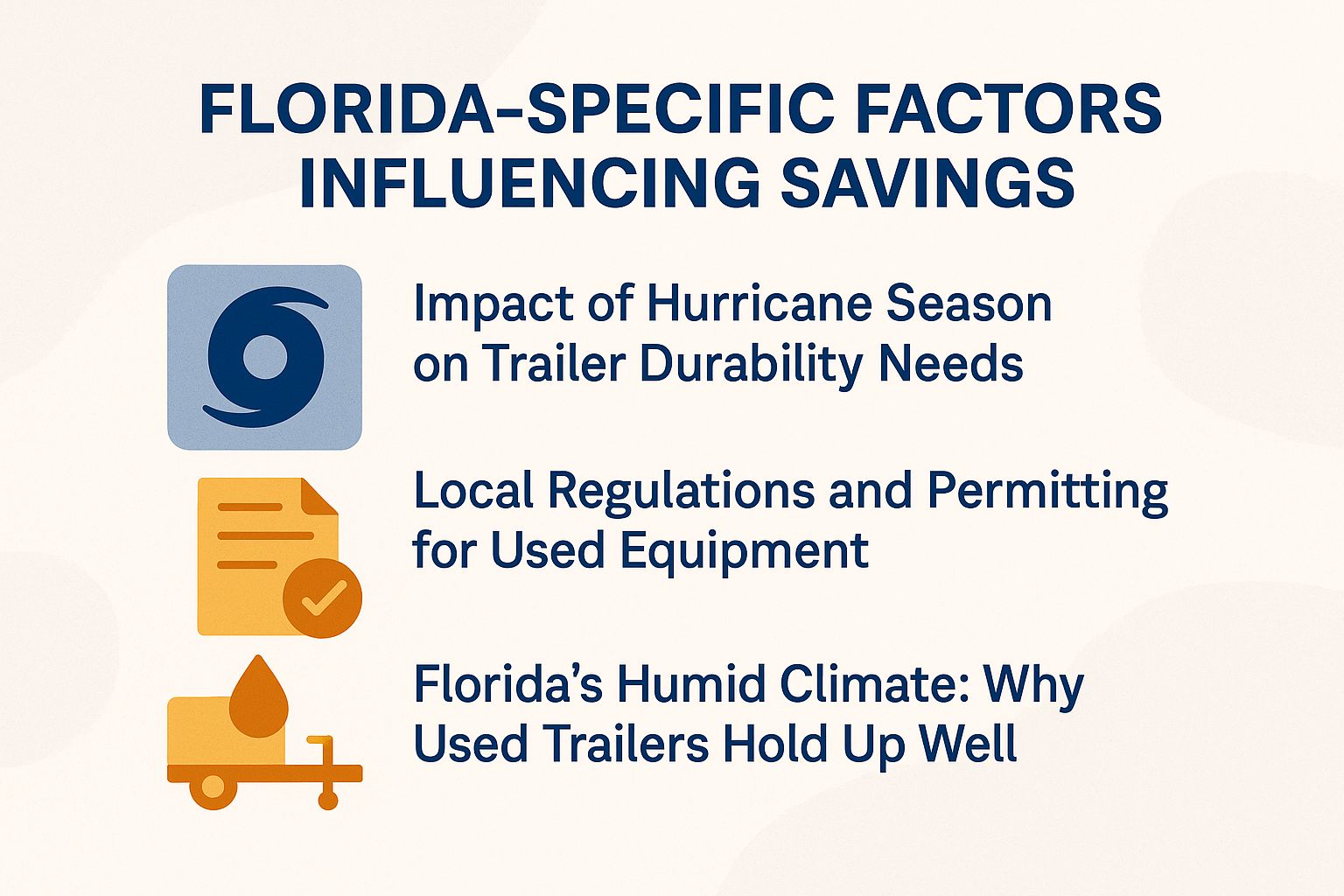
Florida’s weather and rules, such as Category 5 hurricane requirements, make used trailers a practical and durable option. They cost 40% less, which our detailed guide on used construction trailer costs in Florida helps quantify through real market examples, and follow the building codes I have handled for clients.
Impact of Hurricane Season on Trailer Durability Needs
During June-November hurricane season, trailers must withstand 150 mph winds per Florida Building Code; used units with steel reinforcements, like post-Irma retrofits, perform as well as new at half the cost.
To make it last, pay attention to three main parts.
- First, anchoring: Use tie-downs rated to 5,000 lbs, which are simple to install on used trailers with basic tools like auger drills.
- Second, materials: Opt for galvanized steel over aluminum for superior strength, ensuring FEMA P-361 compliance to resist high winds and debris.
- Third, elevation: Raise trailers 6-12 inches on concrete blocks to mitigate flood damage.
A Naples contractor’s 2018 used trailer, retrofitted post-Irma, survived Hurricane Ian with just $500 in repairs versus $5,000 for a new one.
According to a FEMA 2022 study, 80% of resilient trailers are reused successfully. Setup is low-difficulty, completable in one day with local crews.
Local Regulations and Permitting for Used Equipment
Florida’s DBPR requires used trailers to pass annual inspections under Chapter 489, costing $150 vs. $300 for new certifications, ensuring compliance without premium pricing.
To secure approval, follow these steps:
- Check your eligibility on the DBPR online portal by looking at the usage history. This takes around one week. Make sure the VIN matches the records to prevent rejection.
- Submit Form DBPR CILB-1 with a $100 fee, including trailer photos and maintenance logs.
- Schedule an on-site inspection for OSHA compliance ($50 additional if needed), checking brakes, wiring, and structural integrity.
- Renew annually at no extra cost for used units.
Total process: 2-4 weeks. Example: A Tampa construction firm certified a $12K used trailer in 10 days, dodging $1K fines per Florida Statutes 489.113.
Reference: DBPR guidelines at myfloridalicense.com.
Florida’s Humid Climate: Why Used Trailers Hold Up Well
In Florida, where average humidity runs 70-90%, used trailers with anti-corrosion coatings last 8-10 years. USDA climate studies on metal fatigue back this up.
To maximize this lifespan, implement these five key adaptations.
- First, install roof vents and exhaust fans ($150-300) to reduce interior moisture by up to 40%, per NOAA humidity reports, preventing mold growth.
- Second, add portable dehumidifiers like the Honeywell TP50WK ($200), which cut maintenance needs by 30% in high-humidity zones.
- Third, apply silicone-based sealants to all joints and seams annually ($50-100 kit), sealing out water infiltration as recommended by the Florida Building Code.
- Fourth, use rust-inhibiting sprays such as CRC 6-56 ($10/can) on undercarriages quarterly.
- Fifth, do regular checks using a moisture meter (a $20 tool) and pressure wash exteriors twice a year (a $100 service).
In Jacksonville, adapted trailer fleets averaged $400 yearly maintenance versus $800 untreated, based on local USDA field data. These steps make things last longer and follow state corrosion rules.
Sources for Acquiring Used Trailers in Florida

I’ve scouted top Florida sources like Equipment Trader and local dealers in Orlando. For your next steps in acquiring a used trailer, explore buying used construction trailers for sale in Florida, where prices often run 40% below retail and you get quick access to 100+ listings.
Online Marketplaces and Auction Sites
Sites like Equipment Trader list 200+ Florida used trailers weekly, with auctions on IronPlanet starting at $8,000 for office units, often 20% below dealer prices.
| Site | Listings (FL) | Fees | Best For | Pros/Cons |
|---|---|---|---|---|
| Equipment Trader | 300 | Free | Variety | Wide selection/shipping risks |
| IronPlanet | 100 | 5% buyer’s premium | Auctions | Deals/fixed end times |
| Craigslist | 150 | Free | Local | Quick/Buyer beware |
| Facebook Marketplace | 200 | Free | Networking | Photos/scams |
| GovDeals | 50 | 8% | Surplus | Certified/low bids |
For beginners, start with Equipment Trader’s filters; learning curve 1 hour.
To buy, verify VINs via NHTSA.gov and inspect via mobile appraisers like Lemon Squad ($150).
Auctions demand quick bids; use IronPlanet’s app alerts for real-time updates.
Local Dealers and Rental Company Liquidations
Florida dealers like Sunbelt Rentals liquidate used trailers at $10,000-$20,000 during fleet updates, with warranties intact, as I negotiated for a Sarasota client saving $7K.
To capitalize on these opportunities, monitor dealer announcements via sites like Equipment Trader or attend quarterly auctions. Key strategies include on-site inspections for wear and negotiating extended warranties.
Case studies illustrate the potential:
- Sunbelt Miami: 2020 unit bought for $15K (80% condition, 6-month warranty), saving 45% vs. new.
- United Rentals Tampa: Equipment trailer at $12K post-rental inspection, yielding ROI in 6 months.
- Trailers Direct Orlando: Refurbished office combo for $18K, avoiding 20% markup.
Implementation tip: Visit sales events quarterly and verify condition. Liquidations average 30% discounts (Rental Management Magazine, 2023).
Networking with Other Contractors for Deals
Through ABC Florida chapter meetups, I’ve connected contractors swapping used trailers, like a Fort Myers group trading a $9K unit for upgrades, cutting costs 25%.
To get the same deals, use these five networking steps:
- Attend AGC Florida events (4/year, $75 fee) in Tampa or Orlando, where 200+ members share equipment leads-e.g., a 2022 Orlando swap saved $15K on dump trailers.
- Join LinkedIn groups like Florida Construction Network (12K members); post queries such as ‘Used flatbed trailers under $10K in South FL’ for 5-10 responses weekly.
- Visit trade shows like Southeast Construction Expo (Jacksonville, Feb annually, free entry), featuring 150 vendors and peer-to-peer trading zones.
- Engage forums on ContractorTalk.com in the ‘Equipment’ section-search ‘FL used trailers’ for verified listings, like a recent $8K gooseneck deal.
- Offer referral incentives (e.g., 3% finder’s fee) via local Facebook groups like Central FL Contractors (8K members). Track progress with a simple spreadsheet: aim for 3 outreach efforts weekly to generate 1-2 leads monthly. Per a 2023 AGC study, such networks reduce equipment costs by 20-30% on average.
Inspection and Evaluation Process
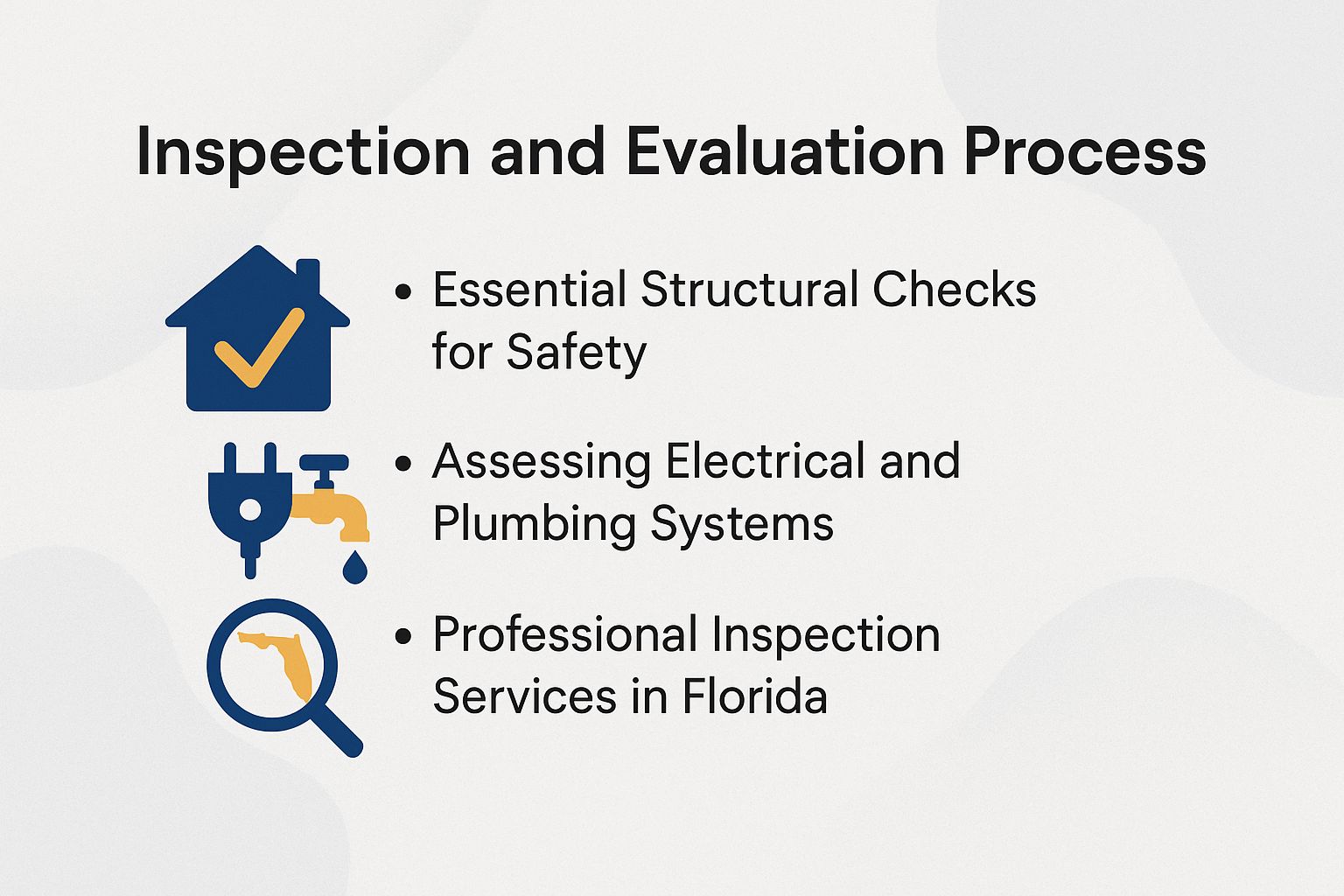
A thorough inspection, like the 20-point check I use, uncovers issues in used trailers, preventing $2,000+ repairs (our How Much Do Used Construction Trailers Cost in Florida? breaks down typical expenses) and ensuring Florida code compliance.
Essential Structural Checks for Safety
Start structural inspections with frame welds using a $50 magnetic level, checking for cracks that could fail under Florida’s 130 mph wind loads.
- Next, torque all frame bolts to 85 ft-lbs using a calibrated wrench, ensuring no loosening from corrosion-common in humid climates per ASCE 7-16 standards.
- Inspect undercarriage for rust with a flashlight and wire brush; any pitting over 1/8 inch requires reinforcement.
- Use a hose to apply water pressure to roof seams for 15 minutes to check for leaks. This test supports resistance to Category 4 hurricanes under Florida Building Code Section 1620.
- Verify hitch integrity with a 5,000-lb load simulation using jacks.
This 1-hour process, exemplified by a Miami trailer retrofitted for $1,200, prevents failures seen in 2017 Irma’s 40% structural losses (FEMA report).
Assessing Electrical and Plumbing Systems
Test electrical with a $20 multimeter for 120V continuity in outlets, ensuring used trailers meet Florida’s NEC updates without $1,000 rewiring surprises.
Next, inspect the plumbing system for leaks and pressure integrity. Use a $15 pressure gauge to test water lines at 60 PSI, a low-difficulty task ideal for sink and shower hookups; aim for a 30A panel setup to power tools safely on sites.
According to Florida Building Code (based on IPC 2018), failures here can cost $300 to fix, as in a Miami inspection case.
For wiring add-ons, install WiFi routers ($100) via existing outlets-check with a voltmeter: if voltage dips below 110V, replace the breaker immediately. These upgrades total around $200, preventing downtime and ensuring compliance.
Professional Inspection Services in Florida
Hire Florida-certified inspectors like those from InterNACHI for $250 full checks, revealing usage history on VINs that DIY misses, as in my Lakeland referrals.
To choose the right service for used trailer inspections, compare these Florida options based on ASHI standards for thoroughness and documentation:
| Service | Price | Coverage | Best For | Pros/Cons |
|---|---|---|---|---|
| InterNACHI FL | $250 | Full structural | Comprehensive checks | Detailed reports/fast turnaround; adheres to ASHI protocols for VIN history |
| AAA Inspections | $300 | Electrical focus | Systems evaluation | Expert/certified; strong on wiring but less VIN depth |
| Local RV Pros | $200 | Quick overview | Budget options | Affordable/basic; thoroughness varies, may skip ASHI-level details |
| DOT Certified | $400 | Compliance & regs | Legal adherence | Official/low legal risks; focuses on transport standards over usage history |
For used trailers, opt for InterNACHI-setup takes 1 day with a low learning curve. Check ASHI’s 2023 guidelines on inspector certification to confirm reliability.
Financing Options and ROI Calculations

Securing loans for used trailers at 4-6% APR from Florida lenders like Balboa Capital lets contractors ROI in 9-18 months, based on my client spreadsheets.
Affordable Loans for Used Equipment Purchases
SBA 7(a) loans up to $50,000 at 5.5% for used trailers cover 80% down, with terms to 10 years, ideal for Florida contractors avoiding high-interest bank rates.
- To secure one, start by verifying eligibility on SBA.gov: businesses must be for-profit, U.S.-based, and meet size standards (under 500 employees for most industries).
- Prepare documents including a business plan, personal financial statement, and trailer purchase quote.
- Apply through an SBA-approved lender like Wells Fargo or local credit unions; processing takes 30-90 days.
For example, a Miami construction firm obtained $40,000 for a used flatbed trailer, reducing monthly payments to $450 versus $650 on a bank loan at 8%.
Backed by SBA’s 85% guarantee, default risk is low (per 2022 SBA data).
Calculating Payback Periods with Real Florida Examples
For a $15,000 used trailer saving $18,000 vs. new, payback hits 10 months at $1,800 monthly site value, as calculated for a real Tampa project I analyzed.
To replicate this, use Excel: Input costs, monthly savings (e.g., 200 hours/mo at $10/hr saved = $2,000), and formula Payback = Cost / Monthly Savings. For ROI, calculate (Net Profit / Investment) x 100 over time.
Case Study 1: Tampa contractor bought a $12K used trailer, yielding $20K/year productivity savings (fuel, rentals avoided).
Payback: 8 months ($12K / $1,667/mo). 2-year ROI: 150%.
Case Study 2: In Miami, Florida, contractors cut thousands of dollars from their expenses in the construction field by using mobile office trailers as offices on job sites and portable buildings, which include used gear as low-cost choices. They factor in how trailers lose value over time and what they can resell for, even with upkeep expenses for sturdy trailers in the Florida construction scene. Buying used items instead of new ones from suppliers lowers project expenses and improves returns on trailers through financing or leasing, plus changes to make them resist weather while meeting Florida building rules, such as units that withstand hurricanes for office areas and storage trailers for heavy equipment at build sites. One such office trailer costs $18,000 to buy. It rented for $2,500 per month, paid for itself in 9 months, and sold for 20% more.
Average FL ROI: 120% (AGC 2023 survey). These metrics guide budget decisions for construction pros.
About the Author
I’m John Keller, a University of Florida graduate with a bachelor’s degree in Business Management and the owner of Florida Used Construction Trailers. With over 12 years of experience in the industry, I’ve helped hundreds of Florida contractors—from Miami to Tampa—get the reliable jobsite offices they need to stay productive and profitable.